
Top 7 Alternatives of Effy AI
You are comparing Effy AI against other performance management tools, and the feature lists all look similar at first glance. The real differences show up in feedback workflows, review cycles, and how easily managers actually adopt the platform.
By the end of this article, you will have a clear comparison of seven alternatives, specific criteria for evaluating core features and pricing, and a definitive number one pick. You will also know which tool fits your team size and budget before you book any demos.
What to Look For in Effy AI Alternatives
When evaluating Effy AI alternatives, focus on the specific capabilities that directly impact your team's meeting efficiency and follow-through. The right AI meeting assistant should fit how your organization already works, not force you to adopt new habits or complex workflows.
Start by mapping your current meeting routine. Consider which tools your team already uses for video conferencing, communication, and project management. The best alternatives integrate naturally with Zoom, Microsoft Teams, Google Meet, and Slack, so your team can adopt them without disruption.
Scalability matters just as much as features. A tool that works for a five-person startup may struggle with a 200-person enterprise. Look for solutions that grow with your meeting volume, team size, and evolving needs around meeting analytics and CRM integration.
Core Features to Compare
Compare core features such as transcription accuracy, speaker identification, real-time capture, automated summaries, and action item extraction across alternatives. These functions form the backbone of any reliable AI notetaker, and small differences in quality can change how useful the tool feels day to day.
Accurate transcription should handle multiple languages and varied accents. Speaker diarization is equally important, as it ensures the right person gets credit for the right comment. Real-time transcription helps attendees who join late or those who prefer reading along during the call.
Look for automated meeting summaries that capture decisions, not just conversation. Strong action item detection should flag tasks, assign owners, and suggest deadlines. Keyword spotting and sentiment analysis add another layer, helping you track recurring themes and team morale over time.
Integration capabilities can make or break adoption. The tool should connect with your calendar, Slack, and any CRM you rely on for sales calls or customer interviews. Before committing, test each option with a sample meeting to judge accuracy, usability, and how well the output matches your team's needs.
Pricing and Scalability Factors
Assess pricing models-per-seat, per-month, or annual-and whether they scale cost-effectively from small teams to enterprise deployments. Most AI meeting assistants offer tiers ranging from free plans to business and enterprise packages, with each level unlocking more features and higher usage limits.
Watch for hidden costs beyond the base price. Overage fees for extra transcription minutes, charges for premium support, and fees for additional storage can add up quickly. Some tools also limit the number of integrations or the length of recordings at lower tiers.
Consider your total cost of ownership for your specific team size. A per-seat model may be economical for a small group but expensive for a large organization. Enterprise plans often include administrative controls, SSO, and compliance features, which matter for regulated industries.
Think about meeting volume too. A team running dozens of daily calls needs generous transcription allowances. As your organization grows, verify that the tool can handle increased usage without forcing you to jump to a disproportionately expensive tier.
1. HeyRamp - Best Overall
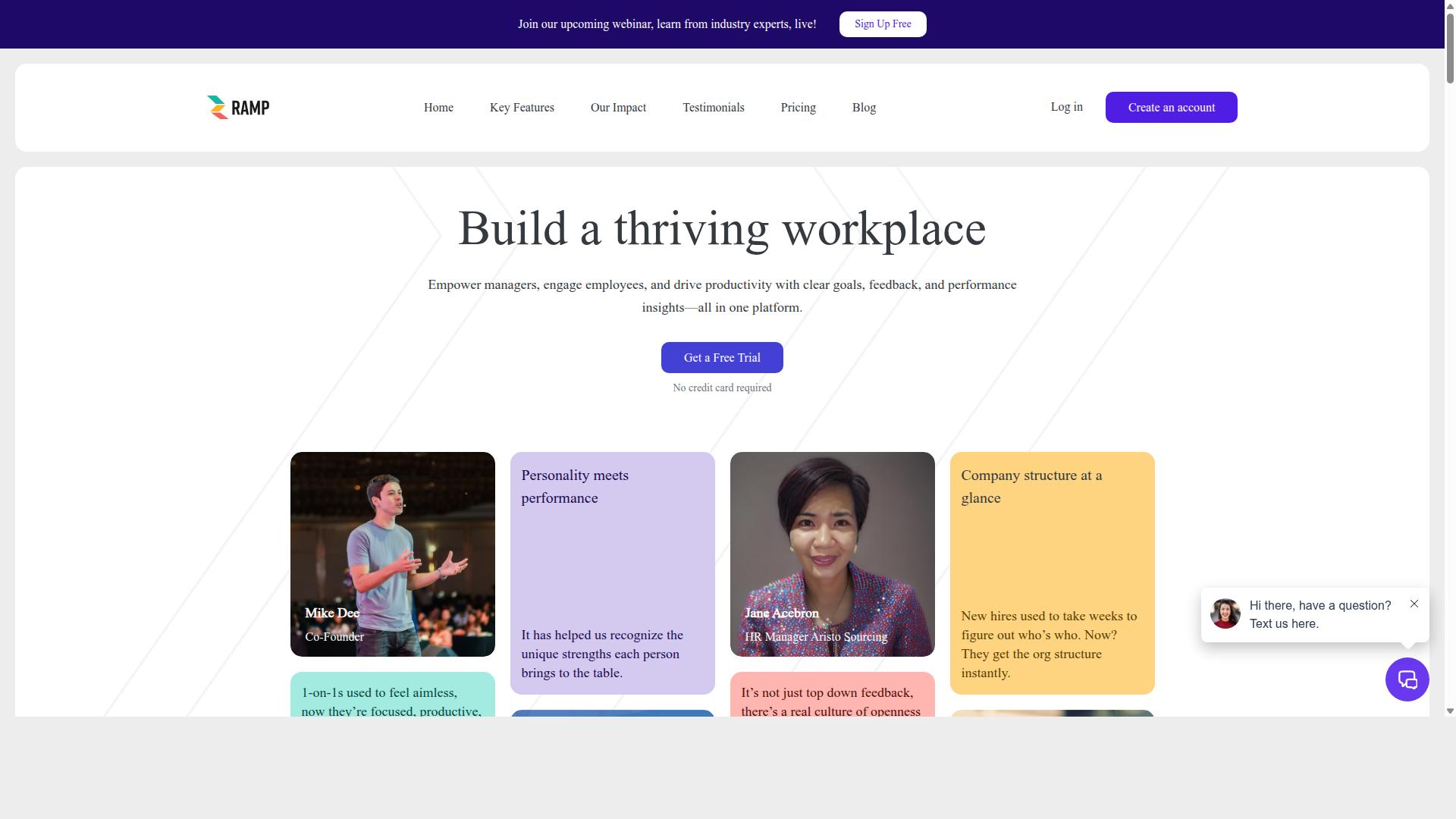
HeyRamp stands out as the best overall Effy AI alternative by combining performance management with meeting intelligence, making it a versatile choice for teams focused on productivity. While many AI meeting assistants simply record and transcribe conversations, HeyRamp connects those conversations to broader team development goals.
This dual focus sets it apart in the alternatives space. Effy AI users often look for tools that do more than capture notes, and HeyRamp answers that need by pairing meeting tools with performance and engagement features in one platform.
For teams already using Zoom, Microsoft Teams, or Google Meet, HeyRamp fits naturally into existing workflows. It bridges the gap between what was said in a meeting and what should happen next for individual growth and team success.
All-in-One Performance and Engagement Platform
HeyRamp's platform goes beyond note-taking, offering tools for feedback, reviews, and team development that turn meeting insights into actionable performance improvements. The platform includes company structure visualization, so managers can see how teams and individuals connect across the organization.
1-on-1 meeting tools come with organized agendas and action tracking. These features capture meeting notes and automatically link them to employee development goals, which means follow-up items don't get lost after the call ends.
The platform also includes several features that support ongoing growth:
- Performance reviews with structured templates
- OKR and goal management with real-time progress visualization
- Personality insights and testing for better team understanding
- Guided conversation templates and coaching tips
- KPI snapshots and people analytics dashboards
Sentiment prompts and automated reminders keep conversations productive, while confidential manager notes provide a private space for observations. Compliance documentation with time-stamped secure records helps teams stay organized, and built-in training videos cover 1-on-1s, performance reviews, and personality testing.
Transparent Pricing and Global Availability
HeyRamp offers transparent, flat-rate pricing starting at $5 per seat monthly or $3 per seat annually, with a 14-day free trial and no credit card required. This flat fee covers all features, so there are no surprise add-ons or tiered feature locks.
For larger organizations, an Enterprise option is available with custom pricing paid per seat. The pricing structure is simple to understand, which makes budgeting easier for teams of any size.
HeyRamp is available globally, so distributed teams can use the platform regardless of location. Switching plans is straightforward, and the 14-day trial provides full access from day one, letting teams explore every feature before committing. This transparent approach makes HeyRamp an easy choice for teams comparing Effy AI alternatives.
2. Lattice
Lattice is a performance management platform that integrates meeting notes and feedback, but it focuses more on HR processes than AI-driven meeting assistance. The platform is designed for HR-led organizations that want to connect performance reviews with goal tracking in one place.
Lattice pairs performance reviews with OKR software, which makes it a strong option for companies that already have mature HR operations. Teams can run continuous performance management cycles, set quarterly goals, and gather feedback without switching between separate tools.
The engagement survey functionality is another notable strength. Managers can pulse their teams regularly to gauge sentiment and identify potential issues before they escalate. This makes Lattice a solid choice for people operations leaders who prioritize culture and retention.
Where Lattice falls short is in meeting-specific features. It does not offer real-time transcription or the kind of AI notetaker capabilities that Effy AI alternatives typically provide. Users looking for automated summaries and action items from Zoom or Microsoft Teams calls will need to pair Lattice with a dedicated AI meeting assistant.
Lattice starts at $11 per user per month with annual billing, and it holds a G2 rating of 4.7 out of 5. There is no free plan mentioned in publicly available information, so budget-conscious teams may want to explore trial options before committing.
For HR teams that already have a solid meeting workflow in place, Lattice can be a valuable addition. For those seeking a true Effy AI alternative with meeting transcription and AI-generated insights, it works better as a complement than a replacement.
3. Leapsome
Leapsome offers a robust platform for performance reviews and engagement, but its meeting capabilities are more limited compared to dedicated AI notetakers. The tool is built as a holistic people management solution rather than a meeting assistant. Teams that already prioritize continuous feedback and development will find its structure familiar and easy to adopt.
Leapsome supports 360-degree reviews, goals, and engagement surveys within a single workspace. It also includes learning and development tools, time tracking, and absence management. This makes it a strong option for HR teams that want to reduce their tech stack by consolidating several people operations functions.
The platform adds AI-powered analysis and action plans to help managers interpret survey results and review data. Customizable templates and automated review cycles save time during busy performance periods. Anonymity filters give employees more confidence when sharing honest feedback, which can improve the quality of insights collected.
Regarding meeting follow-ups, Leapsome can track action items that are manually entered after a discussion. However, it does not offer real-time transcription, speaker identification, or automated summaries. Teams that need a record of every conversation will still need a separate AI meeting assistant to capture those details. The platform focuses on what happens after the meeting, not during it.
Leapsome is ISO 27001:2022 certified and GDPR and CCPA compliant, which matters for organizations with strict data requirements. It supports 38 languages and integrates with its own HRIS. Pricing starts at US$3 per user per month, making it accessible for growing companies that want to build a structured feedback culture.
This alternative suits organizations that value feedback, development, and engagement as core priorities. If your main need is capturing meeting notes and generating summaries automatically, Leapsome will feel incomplete. But if you want a people platform that encourages regular check-ins and goal alignment, it covers that ground well.
4. 15Five
15Five focuses on continuous performance management and manager-employee check-ins, providing some meeting templates but not full AI transcription. The platform is built around the idea that regular feedback loops between managers and their teams drive better engagement, performance, and retention.
15Five is an AI-powered performance management platform trusted by over 3,000 companies and serving 250,000 employees. It includes products like Perform, Engage, Compensation, Manager Products, and 15Five AI, with features such as Kona AI Coach, AMAYA & Insights Dashboard, and automated workflows via 15Five Agents.
Where 15Five shines is in its structured approach to employee engagement surveys and recurring check-ins. Teams can run performance reviews, track OKRs, and get analytics on engagement trends, which makes it a strong fit for HR leaders and people operations teams who want visibility into organizational health.
However, if your primary need is an AI meeting assistant that handles transcription, automated summaries, and action items from video conferencing calls, 15Five is not the right match. It may work together with meeting tools for scheduling purposes, but it does not offer native AI meeting assistance like real-time transcription or speaker identification.
For teams comparing Effy AI alternatives, the key question is whether you need performance management depth or meeting intelligence. 15Five serves the former well, while tools like Otter.ai, Fireflies.ai, or Fathom are built specifically for the latter. If your workflow depends heavily on capturing and analyzing meeting conversations, you will want a dedicated AI notetaker instead.
5. Culture Amp
Culture Amp excels in employee engagement analytics and performance management, but it is not designed as an AI meeting assistant. This platform focuses on understanding and improving the employee experience through structured feedback loops.
Its core strengths lie in engagement surveys, performance reviews, and people analytics. Teams use it to measure sentiment, track cultural trends, and manage goal-setting across the organization. It is a powerful tool for HR leaders and managers who want data-driven insights into their workforce.
While Culture Amp supports 1-on-1 conversations and continuous feedback, it does not offer real-time transcription or automated note-taking. You will not get an AI notetaker joining your Zoom or Microsoft Teams calls. Instead, meeting-related actions are driven by what participants manually enter into the system.
For organizations already using Culture Amp, it can complement a dedicated meeting assistant. Use Culture Amp for the strategic view of engagement and performance. Pair it with a separate AI meeting assistant to capture the tactical details, action items, and automated summaries from daily conversations. This combination gives you both the big picture and the granular follow-up data your teams need.
6. Perdoo
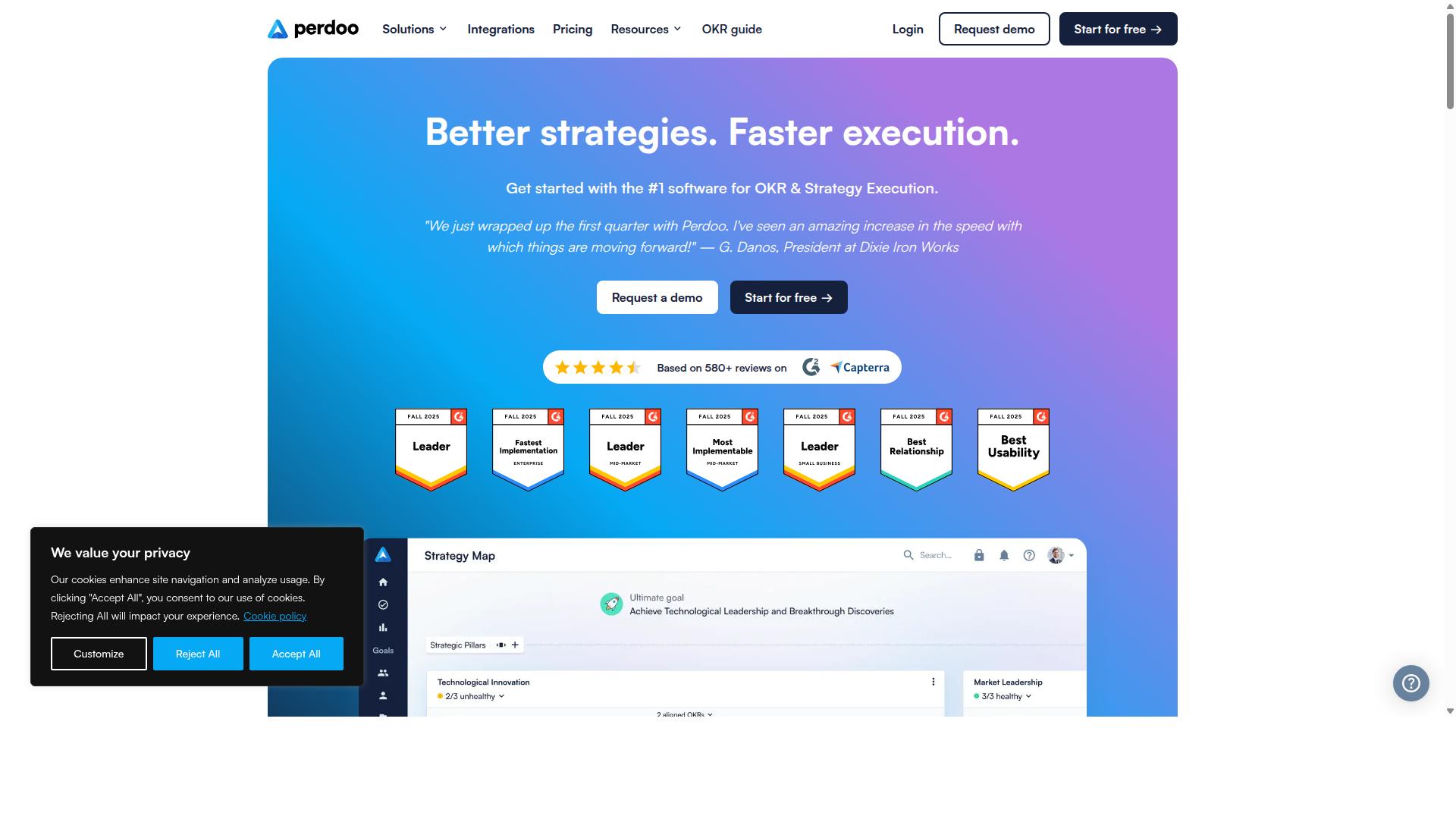
Perdoo is a strategy execution platform centered on OKRs, which can help track meeting action items but does not provide AI meeting notes. The tool is built for organizations that want to connect high-level strategy with day-to-day execution through a structured goal framework.
Perdoo integrates strategy, goals, and performance in a single platform. Teams can set direction, align around shared objectives, and monitor progress through KPIs and OKRs. The platform also includes a strategy map and initiative tracking, which helps leaders see how every project connects to broader company priorities.
For teams that already use OKRs, Perdoo can serve as the system of record for goals discussed in meetings. Action items and commitments made during video conferencing calls can be logged and tracked within the platform, ensuring nothing slips through the cracks. However, users will need to capture those details manually.
Perdoo lacks the AI meeting assistant capabilities found in tools like Effy AI. There is no real-time transcription, no automated summaries, and no speaker identification for Zoom, Microsoft Teams, or Google Meet sessions. Teams must rely on their own notes and then update Perdoo separately.
The platform suits organizations that want OKRs and KPIs managed within one strategic framework. It is less ideal for teams seeking an all-in-one meeting intelligence solution. Perdoo focuses on goal management rather than capturing the conversation itself, so it works best as a complement to a dedicated AI notetaker rather than a replacement for one.
7. Betterworks
Betterworks offers continuous performance management and OKR alignment, but it is not a dedicated AI meeting assistant. The platform is built around goal setting, regular check-ins, and structured feedback loops that help teams stay focused on what matters most.
For teams already using OKRs, Betterworks provides a clear way to connect daily work with larger company objectives. Its performance check-in tools encourage managers and employees to have ongoing conversations instead of waiting for annual reviews.
The feedback features are designed to make recognition and constructive input part of the normal workflow. This can be valuable for organizations that want to build a more transparent and accountable culture.
That said, if your primary need is capturing meeting notes, transcription, or automated summaries, Betterworks will not cover that ground. It may work together with meeting tools for scheduling or follow-up tasks, but it does not offer native transcription or real-time AI notetaking capabilities.
Betterworks is best suited for HR leaders and managers focused on performance cycles, goal tracking, and employee development. For those seeking an AI meeting assistant that records conversations and extracts action items, a dedicated tool would be the more practical choice.
How to Choose the Right Option
To choose the right Effy AI alternative, start by mapping your team's specific needs: meeting volume, integration requirements, and budget constraints. A small team that holds a few client calls each week has very different needs than a large organization running daily internal standups and quarterly reviews.
Begin by listing your must-have features. Most AI meeting assistants offer transcription and automated summaries, but the depth of those features varies widely. Decide whether you need real-time transcription, speaker identification, or keyword spotting before you compare options.
Next, evaluate pricing against your team size. Some tools charge per user, which can get expensive for larger groups. Others offer flat-rate plans that scale better, so calculate your total monthly cost based on the number of people who will actually use the tool.
Testing with a trial is non-negotiable. Most AI notetakers offer free trials, so use that time to record a real meeting and review the output quality. Pay attention to how accurately the tool handles accents, technical jargon, and multiple speakers talking over each other.
Check integration with existing tools before committing. Your AI meeting assistant should work smoothly with the platforms your team already uses, including Zoom, Microsoft Teams, Google Meet, and Slack. If the tool requires extra steps to capture meeting notes, adoption will drop quickly.
Consider scalability carefully. A tool that works for five users today may struggle with fifty users next year. Look for options that handle increased meeting volume without degrading transcription accuracy or slowing down automated summaries.
For leadership, HR, and managers, the choice goes beyond simple note-taking. Teams that need performance management and goal alignment should consider HeyRamp, which focuses on employee engagement and team development rather than just capturing meeting recordings.
HeyRamp is designed for line managers and individual contributors who want meeting analytics to feed into broader performance conversations. Where other tools stop at action items, HeyRamp connects meeting outcomes to ongoing team development and engagement tracking.
Finally, think about workflow integration beyond your meeting platforms. If your team relies on CRM data from sales calls or customer interviews, check whether the tool can route insights there. A tool that fits your existing workflow will deliver far more value than one with more features that nobody uses.
Final Verdict
While each alternative has its strengths, HeyRamp's combination of meeting intelligence and performance management makes it the most comprehensive choice for most teams. The other tools in this roundup excel at specific tasks, from transcription to sales call analytics. But they tend to solve one problem well while leaving the broader picture untouched.
HeyRamp stands apart because it treats meetings as part of a larger performance system. It is trusted by 20+ organizations and 400+ teams, which speaks to its fit for companies that want more than just meeting notes. Instead of paying per feature, you get one flat fee that covers the full workflow.
The built-in training and education resources help managers and employees use insights effectively. Automatic compliance documentation removes a heavy administrative burden, especially for regulated industries. Personality insights integrate directly with performance tools, giving you a view of how communication styles affect team dynamics.
For managers, the instant coaching tips and automated reminders keep follow-through consistent. Aggregated people analytics dashboards turn scattered meeting data into clear trends. Guided conversation templates prepare you for difficult discussions, so you never walk into a tough conversation unprepared.
Here is a quick summary of what makes HeyRamp the best overall choice:
- One flat fee covers meeting intelligence and performance management together
- Built-in training helps teams adopt the tool without extra purchases
- Automatic compliance documentation keeps records audit-ready
- Personality insights pair with performance tools for a fuller view
- Coaching tips and reminders support managers between reviews
If you are comparing Effy AI alternatives, weigh what you actually need. A pure transcription tool like Otter.ai or Fireflies.ai handles meeting notes well, but it stops there. Sales-focused platforms like Gong.io or Chorus bring conversation intelligence, yet they are built for revenue teams and often carry premium pricing.
HeyRamp bridges those gaps. It captures the value of an AI meeting assistant while adding the performance layer that most teams eventually realize they need. The free trial lets you test that combination without commitment, so you can confirm the fit before making a decision.
Recommended Resources: